ПАВИЉОН У ТВРЂАВИ

EXHIBITION OF PAINTINGS: BJELICA, CVETKOVIĆ, KOVAČEV

Gallery of Contemporary Fine Arts Niš

PAINTINGS EXHIBITION: BJELICA, CVETKOVIC, KOVAČEV

PAVILLION IN THE FORTRESS (April 29 - May 23)

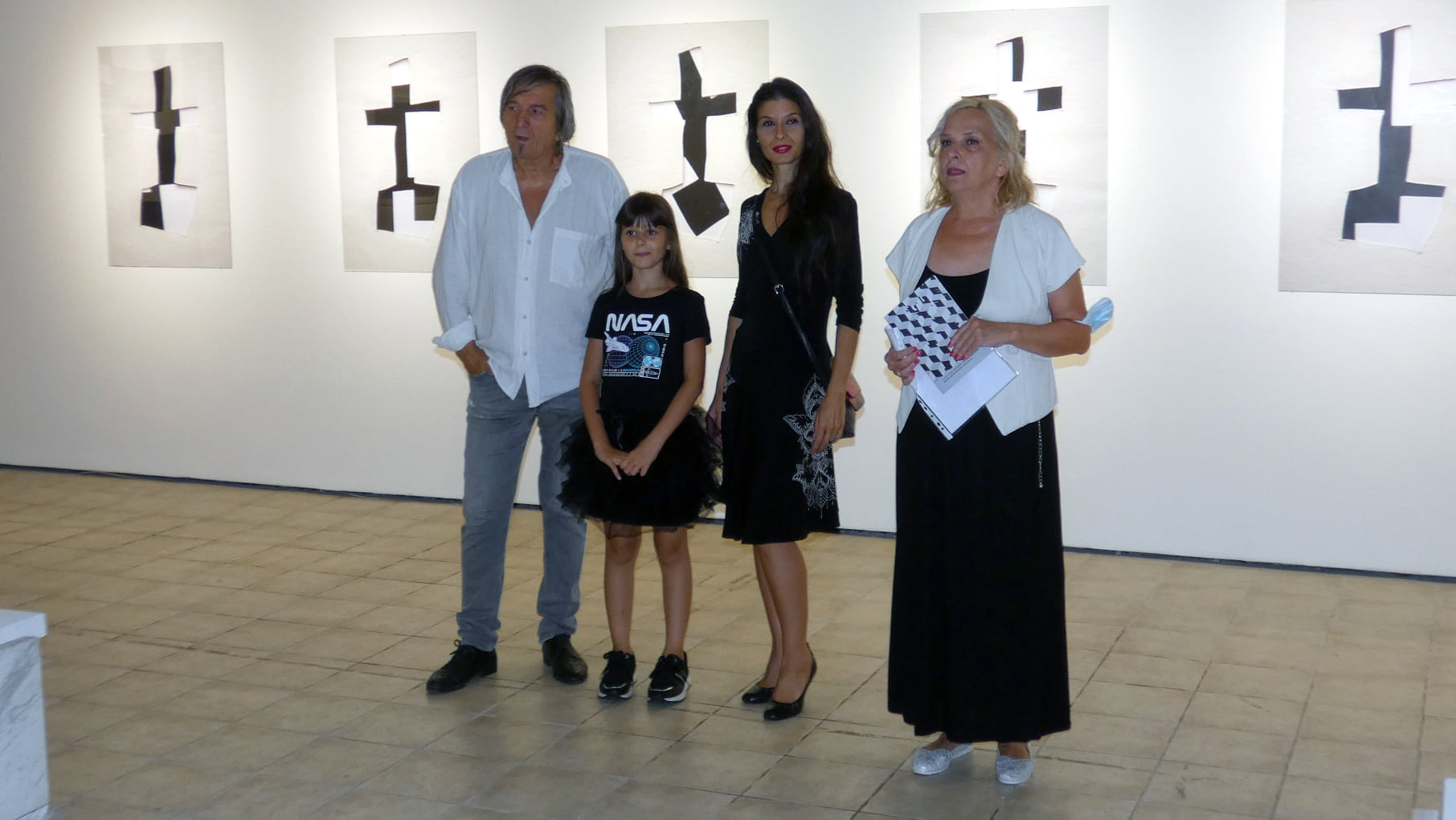
A joint exhibition of three artists with different approaches, ideas and concepts is an opportunity for the art public to become more familiar with the diverse trends of our contemporary art.

IVANA BJELICA (Novi Sad, 1969) graduated from the Academy of Arts in Novi Sad, Department of Painting, in the class of Professor Milan Blanuša. She has held over twenty solo exhibitions and has exhibited at over a hundred collective exhibitions in the country and abroad (Serbia, Montenegro, Croatia, Macedonia, Greece, Romania, Spain, Great Britain, France, the Netherlands, Turkey, Argentina, Mexico, Canada, Japan, India).

She has won several awards in the field of fine arts (drawing, painting, collage).

She is a member of SULUV, ULUPUDS and the Art Circle (Association of Artists of the Petrovaradin Fortress). She has participated in numerous art colonies, art expos and other art events. Her works of art are in numerous private, gallery and museum collections in Serbia and abroad. In addition to fine arts, she is involved in photography, graphic design and interior design. For many years, she was the editor of the art program of the Mali likovni salon gallery, Cultural Center of Novi Sad (2003-2007), she has realized a significant number of exhibitions of eminent artists from the country and abroad and has achieved successful cooperation with many cultural institutions.

He is the founder of the Lumens art association (2013), whose main goal is the development and promotion of contemporary fine arts and culture, international cooperation and education.

He is known to the Niš audience as a participant in the Sićevo Art Colony in 1978, 1994, 2019. The gallery in the Fund contains 6 works. He had a solo exhibition in 1982, and participated in the Niš Salon 2020.

He lives and creates as an independent artist in Novi Sad.

With a careful formulation of the plastic-poetic and aesthetic, he builds concise artistic wholes. At the center of her artistic research is nature or man in the environment in which we live, understanding the complex human destiny. The dynamic gesture and light-dark contrasts are not in the function of any drama, but rather serve to more clearly define space or ideas.

ALEKSANDAR CVETKOVIĆ (Aleksinac, 1947) graduated in painting from the Academy of Fine Arts in Belgrade in 1973, where he also completed his postgraduate studies in 1975. In five decades of creative work, he has organized nearly eighty solo exhibitions in the country and abroad, and participated in the selections of several hundred art events on almost all continents.

He has won a number of domestic and international awards and recognitions, including: Awards for painting at the October Salon in Belgrade in 1977 and 1988; Award at the International Drawing Exhibition in Nuremberg in 1979; First Prize at the YAVA Biennial in New York in 1980; Award at the Alexandria Biennial of Art in 1980; Golden Palette of ULUS in Belgrade in 1985; Politika Award in Belgrade in 1990; Awards at the Nadežda Petrović Memorial in Čačak in 1978 and 1990; Award for Painting at the Milena Pavlović Barila Memorial in Požarevac in 1985 and 1995; Award of the City of Belgrade Despot Stefan Lazarević for 2021, Recognition for Outstanding Contribution to National Culture in 2024. His works are in numerous museum and private collections in the country and abroad.

He is a member of ULUS. He lives and works in Belgrade.

Cvetković follows his own feelings and the sensibility of society in a special way with a deconstructed visual language. Having traveled a long way from hyperrealism through new expressionism, informel and pop art to liberal modernism, he continues to explore mythological and historical themes. In the process of forming new, metaphorical wholes, he introduces new materials, while simultaneously nurturing his own pictorial system, achieving highly aesthetic visual art.

ĐORĐE KOVAČEV (1947) graduated from the painting department of the Academy of Fine Arts in Belgrade in 1972. In addition to painting, he is also involved in musical creativity in various genres. He lived and exhibited in Vienna, Austria from 1982 to 1986. He has had several solo and collective exhibitions. Currently, his permanent exhibition is in the “Kovačev” gallery in Čurug.

While still a student at the Academy of Fine Arts, working in a conservation team at the archaeological site of Lepenski Vir, he came into contact with objects and artifacts created by a man, a member of the Lepen culture. His interest in archaeology dates back to that time, and he deepened it even more during the period when, as a museum associate, he made drawings for documentation at the sites of Velesnica, Gomolava, etc.

In the meantime, he studied various anthropological studies on Amazonian tribes such as the Yanomame. He was particularly interested in the study of Aborigines conducted by Geza Rahaim in the 1930s.

As a result of all these experiences, a cycle of paintings, totems, sculptures, and objects was created, which he himself titled: From Churug to Churunga (Churunga is a well-preserved relic of great importance for the identity of Aboriginal tribes).

He lives and works as an independent artist in Churug.

Kovachev has a clearly defined concept in which he intertwines


PLURAL STRATEGIES

EXHIBITION "PLURAL STRATEGIES" - SELECTION FROM THE COLLECTION OF CONTEMPORARY PAINTING OF THE GALLERY OF CONTEMPORARY FINE ART IN NIŠ

Pavilion and Fortress /December 12th at 1:00 PM/

After exhibitions in Novi Sad and Belgrade, the Gallery of Contemporary Fine Arts Niš is organizing an exhibition from its rich collection entitled "Plural Strategies".

The exhibition features 30 Serbian artists from the second half of the 20th century who, as leading figures of their time, left a deep mark on our art history: Mladen Srbinović, Stojan Ćelić, Mića Popović, Milan Konjović, Ivan Tabaković, Zoran Pavlović, Boža Ilić, Lazar Vujaklija, Ljubica Cuca Sokić, Bora Iljovski, Peđa Milosavljević, Olja Ivanjicki, Sinisa Vuković, Mihajlo Petrov, Stojan Trumić, Bojan Bem, Čedomir Krstić, Boško Petrović, Kosa Bokšan ...

During the seventh and eighth decades, in addition to the existence of a number of newly formed individual painting practices, several parallel currents were discernible, so that completely separate artistic languages ​​and innovative artistic phenomena began to exist at the same time.

Different artistic practices in one artist's work lead to the dematerialization of the work of art, penetrating the essence of the visual language. At the same time, new cultural and artistic phenomena begin to deal with existential questions, that is, critical reexaminations of reality. In addition, during that period, a group of artists appears on the Serbian art scene, expressing interest in the renewal of the figure in different contexts.

The selected works of art do not have a connection with the themes or ideas they explore, but as diverse visual achievements with completely individual problem concepts, they represent significant material for researching the development of visual art in these areas. Artists of various stylistic orientations, as representatives of complex artistic developments, participated in the formation of the collection of the Gallery of Contemporary Fine Arts, which today is among the most valuable collections in our country, aspiring to soon grow into the Museum of Southeast Serbia.

https://youtu.be/JPx8n8U4QUg?si=w2UqtvBpg59KJ-WN


LIDIJA UZELAC'S EXHIBITION: "WHERE I AM"

LIDIJA UZELAC EXHIBITION: "WHERE I AM"
PAVILION IN THE FORTRESS 24 October - 10 November

As a curious artist who always strives for new, exploratory processes, Lidija Uzelac uses various visual techniques: paintings, drawings, canvas printing, layered collage fitting, installations, creating a fresh, innovative system.

Problematizing different ways of reading through enigmatic structures of action, in one part of her latest project she forms free, geometrized forms emphasizing the power of color and lines that possess a wide range of meanings, while in the other part she records her intimate states through a portrait of a Renaissance woman as a personification of mother, woman or matrix, alluding to the source and meaning of existence. Defining the flow of her own thoughts, memories and emotions, she skillfully combines materials to form narratives that relate to the phenomenon and essence of being.
Different levels of meaning invite deeper reflection on the relationship between image and space, reality and illusion, emphasizing elements of property in the current moment.
By arranging very carefully clean, systematically shaped geometrized surfaces and lines through a focused, intimate approach, she forms a complex visual language that functions in the coordinate system of personal symbolism.

Observing the painting process as a mechanism for reading the complex human nature, she expresses a clear personal stance, opposing the increasingly present loss of individual identity. In the title of the exhibition “WHERE I AM”, the artist seeks to establish contact with the viewer by drawing attention to the paradoxes of the contemporary social moment. In addition to abstract paintings and drawings, an independent entity is represented by a wall installation called: "Alma Mater", expressing her fascination with the portraits of women of the Renaissance masters, which remained recorded in her memory since the time of her studies in Florence, as an intriguing motif that for her represents a striking level of meaning related to nature, life, love, truth, wisdom, revealing the deeper truths of human existence.
Expressing a penchant for reduced forms, an analytical, layered approach and thoughtful compositional construction, Lidija Uzelac forms her own positions in the complex perception of the world and art.

Lidija Uzelac (1961. Travnik), graduated from the Academy of Fine Arts in Florence, Department of Painting, and then specialized at the Academy of Arts "Brera" in Milan. She completed her master's degree in the class of prof. Radomir Knežević at the Faculty of Arts in Banja Luka. She has organized 24 solo exhibitions in Pančevo, Pirot, Raška, Plovdiv, Smedrevska Palanka, Niš, Belgrade and over 50 group exhibitions in Serbia and abroad. She teaches at the Faculty of Arts in Niš as a full professor at the Department of Graphic Design in the subject of drawing and painting.
The exhibition will run until November 10.


Djordje Djordjevic "Integrity"

Đorđe Đorđević "Integrity"

September 19 – October 14, 2024

After a long time, the artist Đorđe Đorđević will present himself to the public in Niš with an exhibition of paintings, entitled "Integrity". The exhibition consists of works from his current artistic production, including a number of this year's paintings. The exhibition will open on Thursday, September 19 at 7 p.m. in the Pavilion in Tvrđava.

Starting from the mid-1980s, Đorđe Đorđević's abstract painting opus has developed consistently, recording subtle shifts in terms of reducing the palette and repertoire of graphic symbols. Emphasizing the mental and emotional-expressive qualities of Đorđević’s creative personality, art historian Jovan Despotović notes his ability to disregard rules: “It allows him to maintain the pictorial scene in a consistent state in a justified compositional order, despite the risky process of crossing mutually exclusive principles of geometricism and gesturality in the same pictorial field…”.

With his recent painting, Đorđević offers resistance to the deafening hustle and bustle of everyday life. The basic element and unit of these compositions is the quadrangle, which embodies stability and harmony, but also neutrality and subordination to a larger whole. The gesturally treated surfaces, in comparison with the smaller monochrome fields, reflect the artistic principle of the unity of elements and the dominant, and this is also the thesis that the author examines on a semantic level. Therefore, transferred to the field of social relations, it is the principle of collective interests, which implies the discreet correction of the individual desires of the participants, the conscious surrender of part of personal dignity for the sake of the integrity of the community. In his autopoetic text, Đorđe Đorđević emphasizes that catholicity is an acute social need of the time in which we live.

Đorđe Đorđević was born in 1949 in Belgrade. He graduated from the Accademia di Belle Arti di Brera in Milan, Italy, in 1972. From 1974 to 1976, he designed textiles for the leather and textile factory "Viteks" in Visoko, near Sarajevo. He held twenty-five solo exhibitions in Serbia, Italy, Croatia, France, Montenegro and Austria and took part in a large number of collective exhibitions. His works are represented in several public and private art collections. He has been a member of ULUS since 1981, and in 1982 he received the status of an independent artist. He lives and works in Belgrade.

https://www.youtube.com/watch?v=zNAAxyzg2mc


"Trepča" by Ljiljana Šunjevarić

Trepča by Ljiljana Šunjevarić.

Ljiljana Šunjevarić's latest artistic ensemble will be exhibited for the first time in Niš, at the Pavilion in Tvrđava from August 22 to September 15. With these paintings, the artist remains consistent with issues of social reality, but makes perhaps the first more extensive contribution to understanding the living conditions in northern Kosovo in domestic art. The Trepča Mining Complex, which symbolizes the betrayed ideas of socialist workers' progress, indirectly tells us about the policy of restoring Serbia's sovereignty over the province, from the late 1980s and the more than excessive epilogue from the 1990s. However, Ljiljana's paintings mostly thematize the twenty-year transitional vacuum in this territory, the issues of people's lives and endless expectations. Therefore, the artist paints vedutes of this complex in a hilly landscape, genre scenes from the Trepča restaurant, and portraits of the staff and its guests in muted tones. With the Trepča exhibition, Ljiljana Šunjevarić makes precise but open artistic observations and thus provokes a response from the public consciousness.

Ljiljana Šunjevarić was born in 1979 in Užice. She graduated, received her master's and doctorate in painting from the Faculty of Fine Arts, University of Arts in Belgrade. She has been actively exhibiting at solo and group exhibitions in the country and abroad since 2000. She has been awarded in the field of drawing. She is the author of several art projects in public space. She has participated in numerous domestic and international art colonies and workshops. Her works of art are represented in many collections: Collection of Paintings / Period after 1950 of the Museum of Contemporary Art in Belgrade; Collection of Contemporary Art of the Nadežda Petrović Gallery in Čačak; Collection of the Gallery of Contemporary Art in Zrenjanin; Collection of the National Museum in Arandjelovac; Collection of the National Museum in Smederevo; Collection of the City Museum of Belgrade; Collection of the National Museum in Kraljevo; Collection of Contemporary Painting of the Gallery of Contemporary Fine Arts in Niš and in several private collections. She is employed at the Faculty of Arts of the University of Pristina with a temporary seat in Kosovska Mitrovica, with the title of Associate Professor.


Exhibition Boško Petrović: Sketches for Great Works

Exhibition Boško Petrović: Sketches for Great Works, Pavilion in the Fortress

The Gallery of Contemporary Fine Arts Niš invites you to the grand opening of the exhibition Boško Petrović: Sketches for Great Works on Thursday, July 11 at 8 p.m., Pavilion in the Niš Fortress.

An extensive opus of drawings for tapestries, sculptures, and mosaics will be presented to the Niš audience thanks to the cooperation of the SLU Gallery and the Museum of Vojvodina, which owns a large number of works by Boško Petrović, on the occasion of an important anniversary - the hundredth anniversary of his birth and forty years since the death of the famous artist.

Boško Petrović belonged to the war and post-war generation of authors who, in the middle of the last century, set out in search of a new, authentic artistic expression. In addition to classical painting, he worked with mosaics, drawings, watercolors, collages, and graphics, and is one of the rare artists who contributed to the development of tapestry and its affirmation.

In order to present the part of the works that presents the creative process and method of work, without emphasizing the subject itself, the author Dragana Garić Jovičić presents the sketches for a monument, a mosaic, and a tapestry in the exhibition Sketches for Great Works. All three works, created in different techniques, were conceived as monumental, but the sculpture was never realized.

The audience will have the opportunity to see for the first time a model of the monument and a map of graphics for the Monument to Slavery, created during World War II, partly as a result of novice artistic searches but at the same time one of the first ideas for a monument to the revolution that emerged in occupied Europe.

In the early 1950s, Boško Petrović began to work intensively with mosaics, primarily small-format portraits in this technique, and part of the exhibition is one of the more impressive sketches for the monumental mosaic that is today in the Assembly of the Autonomous Province of Vojvodina.

A special set of works are sketches on the theme of revolution, made for tapestries and murals, created in the period from 1965-75. The extensive cycle of sketches, together with the monumental tapestry, depicts the dedication and professionalism with which Boško Petrović approached the topic.

According to Dragana Garić, the original, bold and expressive artistic expression of this artist with an exceptionally rich oeuvre has placed him among the most significant Vojvodina artists.

Boško Petrović was a participant in the Sićevo Art Colony in 1975, he organized a solo exhibition in Niš in 1976, and the SLU Gallery has 16 of his works in its collection.

The exhibition in the Tvrđava Pavilion will be open to the public until August 5.

https://youtu.be/1RdpY3jXDWg?si=G-xbmEWe9uFO00XB


Bojan Otasevic

On Thursday, May 9, the Pavilion in the Fortress opened a solo exhibition by Dr. Bojan Otašević, a full professor at the Faculty of Philology and Arts in Kragujevac. The exhibition consists of large-format prints from the "Waiting Room" cycle, created in the last ten years and realized in the technique of algraphy with multiple colored passages.

Bojan Otašević has been developing an authentic opus for more than twenty years, which is compact in its uniqueness and consistency. From the very beginning, he opted for the world of figuration, that is, for a traditional genre repertoire that is dominantly based on portraits and human figures. However, Otašević uses the motifs that have been the basis of visual expression since time immemorial as a means of speaking about the current social moment. His lonely figures with lowered shoulders and averted gaze, most often nudes, are a symbiosis of the state of alienation and confusion of a modern man caught in the labyrinth of existing events, which are such that they inevitably cause existential and emotional anxiety over his own fate. The artist presents the figures in close-up, often in a sitting position, without movement, but behind this physical staticity lies an eruptive inner energy, a whirlwind of thoughts and feelings, which Otašević achieves through a skillful combination of visual elements based on the force of gestures, the relationship between light and dark, and a contrasting and luxurious color spectrum. Calling his latest cycle of prints "The Waiting Room" from nameless individual portraits and figures, Otašević creates a kind of group portrait of people from the social margins who are waiting for better times and are potential carriers of necessary changes.

Bojan Otašević was born in Kragujevac in 1973. He graduated, received his master's and doctoral degrees from the Faculty of Fine Arts in Belgrade. He has organized fifty solo exhibitions in many cities in Serbia and in Canada, Lithuania, Bosnia and Herzegovina and Montenegro. He has won 23 awards, including significant national awards for graphics: the Golden Needle of ULUS (2002), the Small Seal (2015) and the Great Seal of the Graphic Collective (2018), as well as awards at international events: the Bronze Needle at the 12th International Biennial "Suva igla" in Užice, the Grand Diploma at the 12th International Portrait Biennial in Tuzla and the Special Recognition for Contribution to Graphics in the World at the Triennial of Graphics in Bitola.

The exhibition will run until May 26


https://youtu.be/SI6fxkRunJ4?si=-F7f23aJOpgsCya7


GRAPHICS AND DRAWING

EXHIBITION "GRAPHICS AND DRAWING" BY STUDENTS OF THE FACULTY OF FINE ARTS IN BELGRADE, THE ACADEMY OF ARTS IN NOVI SAD AND THE FACULTY OF ARTS IN NIŠ

NIŠ, PAVILION IN TVRĐAVI, April 18 - May 5, 2024

Continued cooperation between three higher education institutions and teachers in the subject of Graphics is once again marked this year by the traditional student exhibition "Graphics and Drawing". This year's exhibition points to special approaches to graphics and drawing, to the students' attitude towards the graphic medium, and reveals their thoughts and different ways of realizing graphic sheets and drawings.

In an era of global connectivity, transparency and real-time accessibility, exhibitions that can be seen and “felt” in the exhibition space, those that systematically present student activities, are a valuable source of information. Before us is a selection of works that presents the real state of current student artistic production. It points to the enthusiasm of young creators, their dynamism, wealth of ideas and the essential conditioning of graphics and drawings in the works presented.


Изложба Милан Станојев: у протоку времена

Изложба Милан Станојев: у протоку времена

У уторак 26.марта у 19 сати у Павиљону у Тврђави отворена је изложба слика и графика новосадског уметника Милана Станојева под називом Милан Станојев: у протоку времена.

Ове године навршава се шест деценија професионалног стваралаштва аутора, једног од најзаслужнијих за мапирање Новог Сада као престижног графичког центра у Југославији, професора Академије уметности, учесника многобројних изложби у земљи и иностранству, члана УЛУС-а и Графичког колектива, добитника бројних награда и признања, међу којима се истиче Велики печат Графичког колектива, додељен у мају 1976.године за графику Крушке на столу, израђеној у техници акватинте.   

Према речима ауторке изложбе Јасне Кујунџић Јованов, историчарке уметности и ликовне критичарке, суд о стваралаштву Милана Станојева, који и даље свакодневно ствара,  увек носи ризик пропуштеног, те је тешко сагледати обимно дело, које броји на хиљаде радова и чији визуелни кодови теку паралелно, препличу се, наговештавају један другог. Превасходни утисак о симболичко-метафоричким оквирима, током појединих периода, мења свој појавни облик: Милан Станојев континуирано води дијалог са самим собом, а комуникација повремено тече и у директној форми, приказујући слику тренутка, а далеко чешће у виду својеврсног визуелног знака којим изражава своја размишљања. 

  Изложба у Павиљону у Тврђави је друго представљање Милана Станојева у Нишу, након самосталне изложбе графика приређене у Салону 77 1983.године и прилика је да се шира и стручна јавност југоисточне Србије  Као аутор графике, показао је различита интересовања: у раном периоду његова пажња је усмерена на теме асоцијативно-апстрактног садржаја актуелне у графици и у савременој слици, које карактерише обојеност и постепено увођење фигуративних акцената и записа, наводи ауторка. Од краја седме деценије његове графике карактеришу различити видови фигурације, реализоване у различитим техникама, од акватинте, преко литографије која му пружа услове за увођење боје, до комбинације акватинте и резерваша која омогућава префињене тонске прелазе у оквиру црно-белог дијапазона. Тематске ситуације у којима су присутни људска фигура и продукти човековог рада и бивствовања, карактеришу распричаност, иронија, гротеска, метафоричко-симболички тон, аполонијко-дионизијски сукоб. Од поп арт „реализма“ у раним годинама стваралаштва, Милан Станојев је стигао до гротеске и друштвене критике у завршној фази бављења графиком крајем прошлог века. Током година, експериментисао је с могућностима графичке плоче, технолошке бравуре изводио на темама „малих ствари“ (воће, свакодневни употребни предмети попут завесе, корпе за веш, јастучница и сличног), приказивао поетичке вредности предела, истраживао светлост и сенку у природи и на урбаним исечцима, да би у једном тренутку природу вратио у домен асоцијативног. Упоредо се исказао и као цртач изазивајући посматрача да се запита да ли је цртеж увек претходио графици, или је поступак обрнут. 

Мада делује неспојиво, слично је и са сликарством које представља значајан сегмент, а од почетака овог века преовлађујућу технику у раду Милана Станојева, напомиње ауторка. Његове слике монументалног формата евоцирају различите етапе графичког рада, али паралелно живе потпуно нови и другачији живот, често залазећи у домен апстракције. Мада актуелан више од две деценије, овај део стваралаштва Милана Станојева још чека  на право тумачење, које ће  можда, истиче Јасна Јованов, бити иницирано управо овом изложбом у организацији Галерије савремене ликовне уметности Ниш, коју ће публика моћи да посети до 15. априла. 


https://www.youtube.com/watch?v=jbVwj43CDC8


Надежда Петровић: без боје

Изложба цртежа из колекције Народног музеја Србије под називом Надежда Петровић: без боје, ауторке Евгеније Блануше, музејског саветника. У жељи да упозна публику са цртачким опусом родоначелнице српске модерне уметности, Галерија поставком радова насталих у периоду од 1894. до 1912. године у Београду, на студијским путовањима по Србији и у Риму, наставља обележавање јубилеја 150 година рођења Надежде Петровић.
Изложена дела представљају значајно сведчанство о њеном цртачком умећу, сликарском напредовању, запажању и мотивима који су је интересовали. Према речима ауторке, не могу се извући из контекста целокупног стваралаштва, првенствено сликарства, по којем је Надежда то што јесте - један од најзначајнијих српских сликара не само времена у којем је радила, већ и читавог 20. века. Својим истраживањем Блануша је обухватила све цртеже који се чувају у Народном музеју Србије, групишући их у три целине. Прву чине скице и необавезне белешке, настајале без претходног планирања, спонтано, без трага експресивности својственог за њен сликарски потез. Другој групи припадају цртежи са студија, који показују да је, следећи педагошке захтеве својих професора достигла завидно умеће у академском начину цртања. Трећа група је  посебна целина, издвајаја се од остатка њеног цртачког опуса, и фигуративно може се рећи да су блиски графичком експресионизму.
Цртежи Надежде Петровић одликују се деликатношћу која открива тајанствени аспект стварности, где се према тумачењу ауторке „све и ништа сусрећу и прожимају, па су с једне стране потпуно испуњени графичким формама, а са друге су сведеног графичког репертоара“.  У односу на сликарска остварења, која одишу богатим колоритом и снажном енергијом, Надеждине цртеже одликују  нежни тонови и суптилност у изведби.
Изложба ће за публику бити отворена до 23. фебруара.